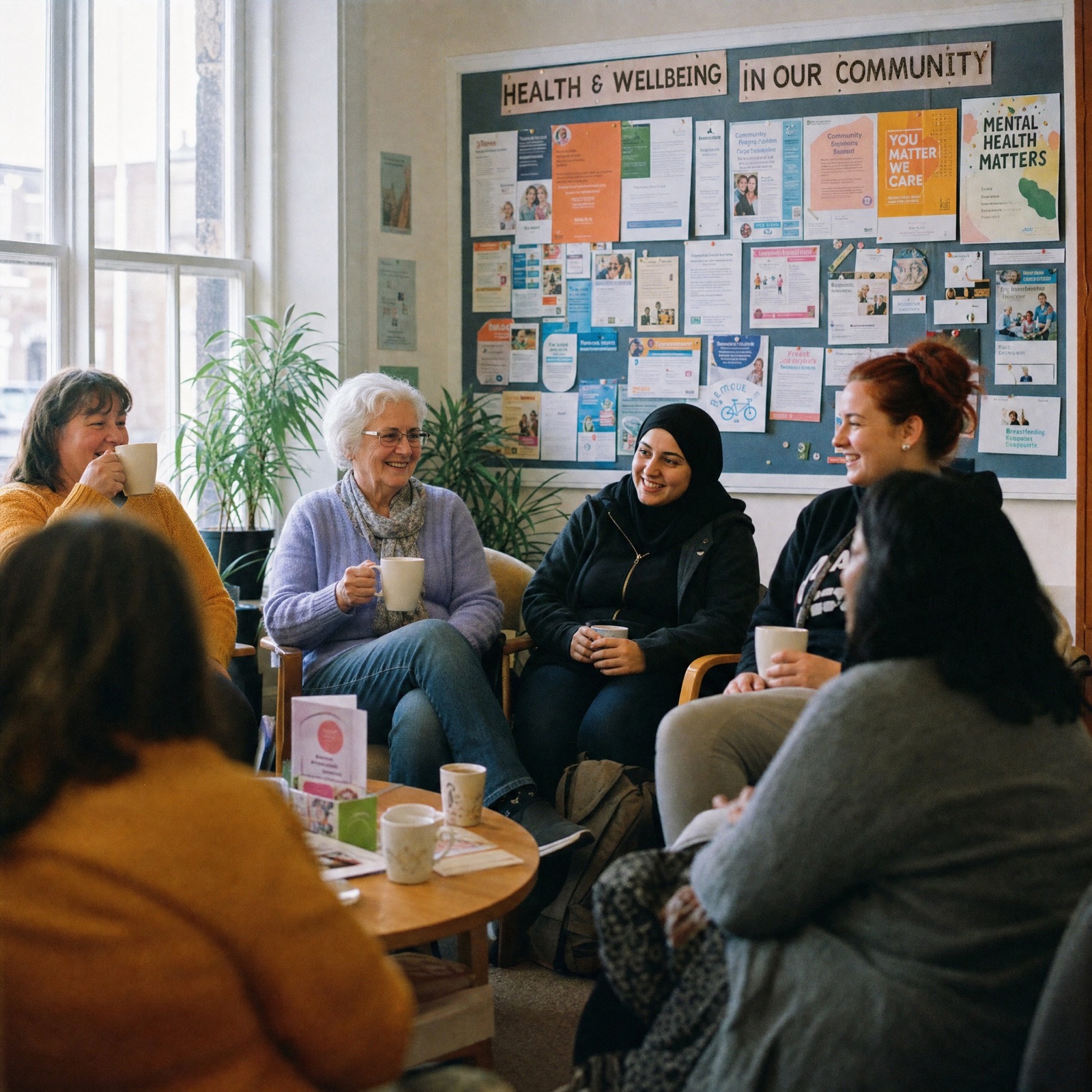

If you've spent time in chronic pain communities or spoken to a pain specialist, you've almost certainly heard the word "pacing." It sounds deceptively simple — pace yourself — yet for many people living with long-term pain, it remains one of the hardest skills to put into practice. At our self-management circles in Elgin, pacing comes up more often than almost any other topic, and the same frustrations arise every time: "I tried it and it didn't work," or "I can't pace myself when I've got a family to look after."
So let's start by unpacking what pacing actually is. At its core, pacing is about spreading activity across time in a way that avoids triggering a pain flare or prolonged crash. It is the opposite of the boom-and-bust cycle that most people with chronic pain will recognise instantly — pushing through on a good day, doing everything you've been putting off, and then spending the next three days in bed paying for it. Pacing interrupts that cycle not by doing less overall, but by doing things more evenly.
The first step is establishing your baseline. This means finding out how much of a given activity — walking, standing at the kitchen counter, sitting at a desk — you can do on a bad day without making things worse. Not a good day. A bad day. That number, however small it feels, becomes your starting point. The goal is to stay under that threshold even on days when you feel well enough to do more, because consistency is what builds tolerance over time.
This is the part that catches people out. On a good day, stopping feels like waste. It feels like letting the day down. Many of our members describe a deep guilt around resting when they could technically be doing something. But from a physiological standpoint, the nervous system in chronic pain is often in a state of heightened sensitivity — sometimes called central sensitisation — and overdoing it on good days can reset your baseline lower, not higher.
Practical pacing strategies that members of our Elgin circles have found useful include setting a timer during housework and stopping when it goes off regardless of whether the task is finished; breaking a longer walk into two shorter ones with a deliberate rest in between; and building rest into a schedule proactively, before fatigue arrives, rather than waiting until you're forced to stop. The last point is particularly important: planned rest is not the same as collapsing. It is a strategic act.
Pacing also applies to cognitive and social activity, not just physical effort. Attending a long family gathering, managing a complex phone call with a benefits office, or concentrating on administrative paperwork are all activities that draw from the same finite energy reserve. Learning to budget cognitive and emotional energy alongside physical energy is an extension of pacing that is often overlooked in clinical settings but discussed regularly in our peer groups.
If you're new to pacing, the most useful thing you can do is start a simple activity diary for one week — just noting what you do and how you feel in the hours afterwards. Patterns emerge quickly, and those patterns are the raw material for building your own pacing plan. You don't need an app or a clinic appointment. A notebook and a willingness to be honest with yourself are enough to begin.