
Margaret had lived with fibromyalgia for eleven years before she walked through the door of a Vibrant Health Advocates - Sable session. In that time, she had seen rheumatologists, physiotherapists, and a succession of GPs. She had tried medication adjustments, a pain management programme at the hospital, and more supplements than she cared to count. Some things helped a little. Nothing solved it. And through all of it, she had largely managed alone.
"My family are supportive," she says, sitting in the community room in Elgin where the group meets, "but there's a limit to how many times you can explain to someone who doesn't have pain why you can't come to a birthday dinner. Eventually you stop explaining. You just say you're fine and you stay home."
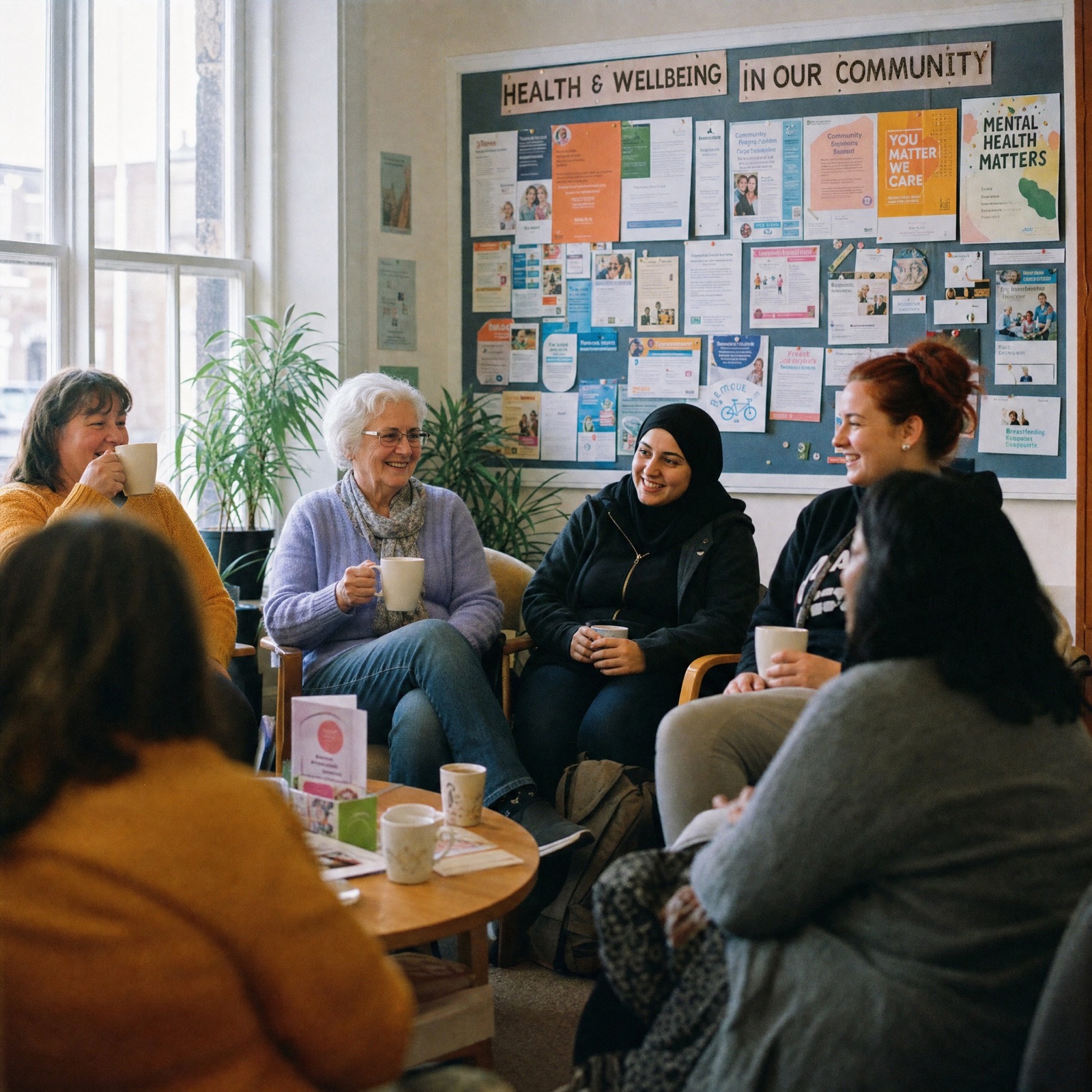
Margaret heard about the self-management circles through a poster at her GP surgery. She almost didn't come. "I thought it would be people sitting in a circle complaining," she says, with a laugh that suggests she's told this story before. "I didn't want to go somewhere and feel worse. I already knew how hard my life was. I didn't need eleven other people confirming it."
What she found was different. In her first session, a woman across the circle described the specific shame of having to cancel plans at the last minute — the way it erodes friendships slowly, the way you start to pre-emptively withdraw from social events just to avoid the moment of letting someone down. Margaret had never heard anyone else articulate it. "I thought I was the only one who felt like that. I know that sounds naive, but when you're in it, you don't know what other people are carrying."
Over the following months, Margaret began applying strategies she'd discussed in the group. She started a simple pacing diary — something a previous physiotherapist had mentioned but never explained properly. In the group, other members walked her through how they used theirs, what worked and what didn't, and she found an approach that fitted her life in Elgin: her part-time hours at a local shop, her elderly mother she visits twice a week, the garden she had largely abandoned.
She also, she says quietly, stopped pretending she was fine. Not in a dramatic way — she didn't suddenly announce her condition to everyone she knew. But she became more matter-of-fact with her GP, asking more direct questions and pushing back when answers felt inadequate. "I think hearing other people advocate for themselves gave me permission to do it too. It sounds small, but it wasn't."
Margaret has now been attending the circle for almost two years. She describes the group not as a treatment or a service but as "the part of the week where I don't have to translate myself." That phrase — not having to translate herself — captures something that is difficult to quantify but that comes up repeatedly among members: the relief of being in a room where the baseline understanding is shared, where you don't have to spend energy explaining before you can begin.
If Margaret's story resonates with you, we would encourage you to get in touch. Our self-management circles in Elgin are open to anyone living with chronic pain, and you can attend an initial session without any commitment to continue. Sometimes one afternoon is enough to know whether it's the right fit — and sometimes, like Margaret, you nearly don't come, and it changes everything.